


Energy bills remain a major concern in 2026, with many households asking the same question: what is the average energy bill in the UK right now?
With prices continuing to fluctuate, it’s becoming harder to know whether you’re overpaying—or simply paying the new normal. Understanding the average energy bill in the UK in 2026 can help you compare your costs and spot opportunities to save.
In this guide, you’ll find a clear breakdown of UK energy costs by household size, including monthly and yearly estimates, plus what’s driving these prices and how they compare to previous years.
👉 If you’re looking for ways to cut your costs, check out our guide on how to reduce energy bills in the UK.
👉 For a full breakdown of why prices are rising, read our guide on UK energy bills 2026 explained.
Average Energy Bill UK 2026 (Quick Answer)
If you’re looking for a simple benchmark, here’s the average energy bill in the UK in 2026 based on the latest price cap data:
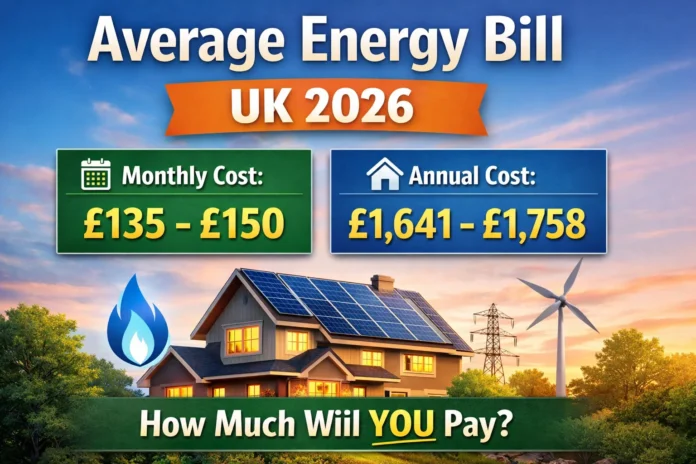
- 💷 Annual bill (typical household): ~£1,641 – £1,758
- 📅 Monthly cost: ~£135 – £150
👉 The most widely used figure is around £1,641 per year, based on the current Ofgem energy price cap for 2026 (Ofgem)
👉 These figures are based on the UK energy price cap, explained in our detailed guide.
📊 What This Means in Real Terms
- A typical UK household (2–3 people) spends about £137 per month on energy (Energy Saving Trust)
- Electricity costs make up a slightly larger share than gas in many homes
- Your actual bill may be higher or lower depending on usage and home size
⚠️ Important: This Is Just an Average
These figures are based on “typical usage,” which means:
- Larger homes → higher bills
- Poor insulation → higher costs
- Heavy heating use → significantly higher bills
👉 In reality, many households in 2026 are paying closer to £1,700–£2,000 per year, especially with rising usage and market fluctuations (moneysupermarket.com)
🔎 Quick Takeaway
- Average UK energy bill (2026): ~£1,641/year
- Monthly cost: ~£135–£150
- Your bill depends heavily on usage, home size, and efficiency
Next, let’s break this down further by household size—so you can see where you fit.
Energy Bills by Household Size (Full Breakdown)
Your energy bill isn’t just based on average figures—it depends heavily on your home size and usage. Here’s a realistic breakdown of UK energy bills in 2026 by household type.
📊 Estimated Energy Costs by Household Size (2026)
| Household Type | Annual Cost (£) | Monthly Cost (£) |
|---|---|---|
| 1-bedroom flat | £1,200 – £1,400 | £100 – £115 |
| 2–3 bedroom home | £1,600 – £1,900 | £135 – £160 |
| 4+ bedroom house | £2,200 – £2,700 | £180 – £225 |
🏠 1-Bedroom Flat
Smaller homes generally use less energy.
- Lower heating requirements
- Fewer appliances
- More efficient to maintain temperature
👉 Ideal for keeping energy costs closer to the lower end of the scale.
🏡 2–3 Bedroom Home (Typical UK Household)
This is the most common household type.
- Moderate energy usage
- Higher heating demand than flats
- Costs align closely with UK averages
👉 Most households fall into this range.
🏘️ 4+ Bedroom House
Larger homes naturally come with higher costs.
- More rooms to heat
- Higher electricity usage
- Often older or less efficient properties
👉 Bills can rise quickly, especially in winter.
⚠️ Why Your Bill Might Be Higher
Even within the same home size, costs can vary based on:
- Insulation quality
- Number of occupants
- Heating habits
- Energy efficiency of appliances
👉 Two similar homes can have very different energy bills.
🔎 Quick Takeaway
- Smaller homes = lower bills
- Larger homes = significantly higher costs
- Usage and efficiency matter just as much as size
Next, let’s break down gas vs electricity costs in the UK—and which one is costing you more.
Gas vs Electricity Costs Breakdown (UK 2026)
Understanding where your money goes can help you manage your bills better. In most UK homes, energy costs are split between gas (heating) and electricity (appliances, lighting, etc.)—but they don’t cost the same.
⚡ Average Cost Split (Typical Household)
For a standard UK home in 2026:
- Electricity: ~55%–60% of total bill
- Gas: ~40%–45% of total bill
👉 Electricity usually costs more per unit, even though gas is used heavily for heating.
💷 Typical Monthly Costs
- Electricity: £75 – £95 per month
- Gas: £60 – £80 per month
👉 These figures vary depending on usage, but electricity tends to be the bigger expense overall.
🔥 Why Electricity Is More Expensive
- Higher unit price per kWh compared to gas
- Powers multiple appliances used daily
- Increased use of electronics and home devices
👉 Even small electricity usage adds up quickly.
🌡️ Why Gas Still Drives Your Bill
Even though it’s cheaper per unit:
- Gas is heavily used for heating and hot water
- Winter usage can spike dramatically
- Poor insulation increases gas consumption
👉 In colder months, gas can temporarily become your biggest cost.
⚠️ Homes Without Gas (Electric-Only)
If your home doesn’t use gas:
- Electricity becomes your only energy source
- Heating costs can be significantly higher
- Bills are often above average
👉 These households tend to feel price increases the most.
🔎 Quick Takeaway
- Electricity = higher cost per unit
- Gas = higher usage (especially in winter)
- Both together determine your total bill
👉 Want to reduce both? Check out our guide on how to reduce energy bills in the UK.
Next, let’s explore what factors affect your energy bill the most—and why some households pay far more than others.
What Affects Your Energy Bill the Most?
Even with average figures, your actual bill can be very different. In 2026, several key factors determine how much you pay for energy in the UK—and understanding them can help you identify where to save.
🔥 Energy Usage (Biggest Factor)
The more energy you use, the more you pay—simple as that.
- Heating habits (longer heating hours = higher bills)
- Number of people in the household
- Daily appliance usage
👉 Two identical homes can have very different bills based on usage alone.
🏠 Insulation & Energy Efficiency
Poor insulation is one of the biggest hidden costs.
- Heat escapes quickly from poorly insulated homes
- More energy is needed to maintain warmth
- Older properties tend to be less efficient
👉 Improving insulation can reduce bills significantly.
⚡ Type of Energy Tariff
Your tariff directly affects how much you pay per unit.
- Fixed tariffs offer price stability
- Variable tariffs change with the Ofgem price cap
- Some households remain on expensive default tariffs
👉 Being on the wrong tariff can cost you £100+ extra per year.
🌍 Location & Property Type
Where you live also plays a role.
- Rural homes may have higher costs (especially without gas access)
- Larger or detached homes lose more heat
- Flats are usually more energy-efficient
👉 Property type can significantly influence your bill.
👨👩👧 Household Size
More people = more energy use.
- Increased heating demand
- More hot water usage
- More appliances running daily
👉 Larger households naturally have higher bills.
🧊 Seasonal Changes
Energy usage isn’t the same all year.
- Winter → higher heating usage
- Summer → lower overall consumption
👉 Bills often spike during colder months.
🔎 Quick Takeaway
- Usage is the biggest driver of your energy bill
- Insulation and efficiency can make a huge difference
- Tariff choice and household size also matter
Next, let’s look at regional differences across the UK—and whether where you live affects your energy costs.
👉 Your rates are largely influenced by the UK energy price cap, which sets unit costs.
Regional Differences in the UK
Your location can also influence how much you pay. While energy prices are regulated nationally, regional differences in the UK still affect overall energy bills in 2026.
📍 North vs South: Is There a Difference?
In general:
- Southern regions often have slightly higher living costs overall
- Northern regions may experience colder weather, leading to higher heating usage
👉 So while unit prices are similar, usage patterns create differences.
🌆 Urban vs Rural Areas
Where you live—city or countryside—can significantly impact your bill.
Urban areas:
- Smaller homes and flats → lower heating needs
- Better access to gas networks
- More competitive supplier options
Rural areas:
- Larger, detached homes → higher heating costs
- Some homes rely on electricity or oil instead of gas
- Fewer supplier options
👉 Rural households often face higher average energy costs.
🏡 Property Type by Region
Different regions tend to have different housing types:
- Cities → more flats and modern apartments (more efficient)
- Countryside → older homes with poorer insulation
👉 Older properties can increase energy usage regardless of location.
🌡️ Climate Impact
Weather plays a key role:
- Colder regions → more heating required
- Milder regions → slightly lower energy usage
👉 Even small temperature differences can affect annual costs.
⚠️ Important Note
Energy unit prices are still largely controlled by the Ofgem price cap, so differences come more from how much energy you use, not the price itself.
🔎 Quick Takeaway
- Location affects usage more than price
- Rural homes tend to have higher bills
- Property type and weather play a major role
Next, let’s compare how 2026 energy bills stack up against previous years—and what’s changed.
How 2026 Compares to Previous Years
To understand today’s costs, it helps to look at how UK energy bills have changed over the past few years. The trend shows a sharp rise, a brief stabilisation, and now renewed pressure in 2026.
📈 2023–2024: Peak Energy Crisis
- Energy bills reached record highs
- Global gas shortages pushed prices up dramatically
- Government introduced major support schemes
👉 This was the most expensive period for many UK households.
📉 2025: Temporary Stabilisation
- Wholesale energy prices eased slightly
- Government support helped reduce pressure
- Bills became more predictable
👉 Many households saw small relief—but prices stayed high overall.
⚡ 2026: Rising Again
- Prices are increasing once more
- Government support has been reduced
- Adjustments to the Ofgem price cap have pushed costs up
👉 Bills are not at peak crisis levels—but they’re still far above pre-2020 averages.
📊 Quick Comparison
| Year | Trend | What Happened |
|---|---|---|
| 2023–2024 | 🔺 Very High | Energy crisis peak |
| 2025 | ➖ Stable | Slight relief |
| 2026 | 🔺 Rising Again | Reduced support + price shifts |
🔎 What This Means for You
- Energy bills are no longer spiking dramatically
- But they are unlikely to return to old lows anytime soon
- Households must now adapt to a new normal of higher costs
🔎 Quick Takeaway
- 2026 prices are lower than peak crisis—but still high
- Support has decreased, increasing real costs
- Long-term savings strategies are more important than ever
These changes are part of a wider trend explained in our why energy prices are rising in the UK guide.
👉 Next, let’s look at practical ways you can lower your energy bill starting today.
How to Lower Your Energy Bill (Practical Tips)
Now that you know the averages, the next question is: how can you actually reduce your energy bill in the UK?
The good news is—you don’t need major upgrades to start saving. A combination of simple habits and smart choices can lower your costs quickly.
👉 You may also qualify for help—check UK energy support schemes 2026 to see what you can claim.
⚡ Start With Quick Wins
These require no upfront cost and can reduce your bill immediately:
- Turn off appliances on standby
- Lower your thermostat by 1°C
- Switch off lights when not in use
- Run washing machines with full loads
👉 Small changes like these can save £100+ per year.
🏠 Improve Your Home Efficiency
If you’re ready to go further:
- Add or upgrade loft insulation
- Seal drafts around doors and windows
- Use energy-efficient lighting and appliances
👉 These changes reduce how much energy your home needs.
💷 Review Your Energy Tariff
Many households overpay without realising it.
- Check if you’re on a standard variable tariff
- Compare available deals
- Consider switching if better rates are available
👉 This alone can save £100–£200 annually.
🔥 Focus on Heating First
Heating is the biggest cost in most UK homes.
- Use timers and smart controls
- Avoid heating empty rooms
- Maintain your boiler regularly
👉 Improving heating efficiency gives the biggest savings.
🔎 Quick Takeaway
- Start with free changes for instant savings
- Improve efficiency for long-term benefits
- Review your tariff to avoid overpaying
👉 For a full step-by-step guide, read how to reduce energy bills in the UK.
Next, let’s answer some of the most common questions people ask about energy bills in the UK.
FAQs (People Also Ask)
Here are some of the most common questions people search about the average energy bill in the UK in 2026—with quick, clear answers.
❓ What is the average electricity bill in the UK?
The average electricity bill in the UK is around £75–£95 per month, depending on usage and tariff. Homes with higher appliance use or electric heating will typically pay more.
❓ How much is gas per month in the UK?
Gas bills usually range from £60–£80 per month for a typical household. Costs increase significantly during winter due to higher heating demand.
❓ Why is my energy bill higher than average?
Your bill may be higher due to:
– High energy usage
– Poor insulation
– Larger home size
– Being on an expensive tariff
👉 Even small inefficiencies can increase costs over time.
❓ What is considered a high energy bill in the UK?
In 2026, anything above £2,000 per year is generally considered high for an average household. Larger homes or inefficient properties may exceed this.
❓ Do energy bills vary by location in the UK?
Yes—but mostly due to usage, not price. Colder regions and rural homes often have higher bills due to increased heating needs.
❓ How can I check if I’m overpaying?
Compare your usage and costs with UK averages and review your tariff. If your bill is significantly higher without a clear reason, you may be overpaying.
🔎 Quick Tip
If your bill feels too high, the best next step is to review your usage and make small efficiency improvements first.
Conclusion
The average energy bill in the UK in 2026 gives you a useful benchmark—but your actual costs depend on how you use energy, your home, and your tariff.
By understanding where your money goes and how your usage compares, you can make smarter decisions and avoid overpaying.
👉 Want to reduce your costs? Check out our guide on how to reduce energy bills in the UK.
👉 Want to understand the bigger picture? Read our full guide on UK energy bills 2026 explained.
👉 To better understand how pricing works, read our guide on the UK energy price cap explained.
👉 You can also check UK energy support schemes 2026 to see if you qualify for help with your energy bills.
If this helped you understand your bills better, consider sharing it with others who might be overpaying without realising it.