

UK Government Moves to Avoid Escalation in Iran Conflict
The UK distances itself from Iran war tensions as Prime Minister Keir Starmer emphasizes a cautious approach to the growing crisis in the Middle East. The British government says it wants to avoid deeper military involvement while continuing to work with international partners to protect global shipping routes and regional stability.
Speaking amid increasing global concern over the situation, Starmer said the UK’s priority is preventing escalation while protecting international trade routes and British interests.
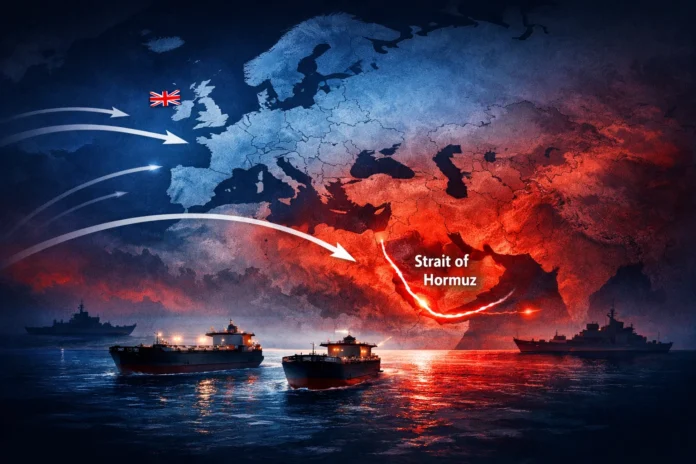
The conflict has raised fears about security in the strategically important Strait of Hormuz, a key shipping corridor through which a large share of the world’s oil supply passes.
UK Distances Itself From Iran War Amid Pressure From Allies
The United States, under President Donald Trump, has urged allied nations to send naval forces to help secure shipping lanes in the region.
However, the UK government has so far declined to deploy warships, instead focusing on alternative options that could support maritime safety without increasing military tensions.
British officials are reportedly exploring the use of minesweeping drones and surveillance technology to help keep the vital shipping route safe.
This approach reflects London’s broader strategy of avoiding direct military escalation while maintaining support for international stability.
European Allies Also Reject Naval Deployment
The UK is not alone in taking a cautious stance.
Several major European nations, including Germany and Italy, have also ruled out sending warships to the region at this stage.
European leaders have stressed the importance of diplomatic solutions and coordinated international dialogue, warning that additional military deployments could risk widening the conflict.
Analysts say the reluctance among European governments has complicated Washington’s efforts to form a larger international naval coalition.
Rising Energy Prices Raise Economic Concerns
The growing tensions around the Strait of Hormuz have already begun to affect global markets.
Energy analysts warn that any disruption to shipping through the strait could push global oil prices higher, increasing fuel and heating costs across Europe.
In response, the UK government has announced financial support for vulnerable households struggling with rising energy costs linked to the geopolitical crisis.
Rising tensions in global energy markets are also increasing concerns about household expenses. Recent analysis suggests that energy price volatility could worsen the pressure on family budgets, similar to trends discussed in our report on What Rising Living Costs Could Mean for UK Households in 2026.
UK Emphasizes Diplomacy and Stability
Downing Street officials say Britain will continue working with international partners, including European allies and the United States, to reduce tensions and stabilize global shipping routes.
While the UK remains committed to protecting international trade and energy supply chains, the government has made clear that avoiding a broader regional war remains its top priority.
For now, Britain’s strategy focuses on diplomatic engagement, targeted security measures, and coordination with allies rather than direct military intervention.
Key Takeaways
- The UK government says it will avoid deeper involvement in the Iran conflict.
- Prime Minister Keir Starmer is prioritizing diplomacy and de-escalation.
- The US, led by Donald Trump, has asked allies to send warships.
- European countries including Germany and Italy have rejected naval deployment.
- Tensions around the Strait of Hormuz are raising concerns about global energy prices.
The economic ripple effects of geopolitical conflicts are also feeding into the broader national conversation about affordability, a topic explored further in our article Why the Cost of Living Debate in the UK Is Heating Up Again.
Source: This report is based on information originally published by The Guardian.